






Can a mini split be your only heat in Louisiana

Skip collecting and comparing quotes for the new mini split.

Skip the calls

Can a mini split be my only heat in Louisiana?

Winters in Louisiana don't ask much of a heating system, and you're wondering if the mini split you have or are looking at can carry the house through January without a backup furnace sitting there unused. You want to know if you'd be cutting it close on the coldest nights, or if that's really overthinking a climate that barely dips below freezing.

Yes, a mini split can heat your Louisiana home all winter

A mini split works by moving heat, not burning fuel for it, and that works fine down to temperatures far colder than Louisiana sees most winters. Most homes here already heat with electricity, so a mini split fits right into how the house is set up rather than fighting against it. On the handful of nights that drop near freezing, a properly sized unit still keeps up. What matters is sizing it to the room or the house correctly from the start, since an undersized unit will run constantly without catching up on those colder nights. Get that right and there's no reason to keep a furnace around as backup.

A wall-mounted mini-split air conditioner indoor unit with visible dust and staining, installed on a beige interior wall below white crown molding.
Before you get your mini split installation
A white wall-mounted mini-split indoor unit high on a beige interior wall, with a potted olive-like tree at right and an armchair and window visible through a doorway at left.
After you get your mini split installation

A mini split doesn't make heat the way a furnace does. It moves heat. The outdoor unit pulls warmth out of the air outside, even on a cold morning, and a reversing valve sends it inside instead of out. That's the same valve and the same refrigerant line that keep your rooms cool every summer, just running backward. The indoor head puts that warm air straight into the room it's mounted in, which is why a mini split heats the room it's in well but leaves a room down the hall to whoever's heating that one. On the rare night that gets cold and damp enough to frost the outdoor coil, the system pauses to defrost itself. You'll feel a few minutes of cool air blow through before it switches back to heat, which is normal and not a sign anything's wrong. Louisiana winters rarely push a mini split anywhere near its limit. The same unit sized to handle your house in August has more heating capacity than a Louisiana winter asks for.

How a mini split heats your house

  • A mini split warms a room by pulling heat out of the outside air, not by burning gas, so it works even when it's cold out.
  • The outdoor unit has a reversing valve that switches the refrigerant flow, turning the same system that cools in July into a heater in January.
  • Most mini splits installed today hold their heat output down into the 20s and low teens, well past anything Louisiana sees most winters.
  • The indoor head blows warm air directly into the room it's mounted in, so the room with the head stays warm while rooms without one depend on open doors or hallways.
  • A mini split sized to cool your home in August is sized against your heating need too, since the load in a Louisiana winter is smaller than the summer load it's built for.
  • If the outdoor coil ices over on a cold, damp night, the system runs a defrost cycle and blows cool air for a few minutes before switching back to heat.
A white wall-mounted mini-split air conditioner unit installed high on a beige interior wall below white crown molding, with a window and woven shade at the left edge showing green foliage outside.
A mini split sized and installed right will heat a Louisiana home on its own through the coldest nights you get.
A dusty, stained white wall-mounted mini-split air conditioner indoor unit installed high on a plain off-white interior wall near the ceiling.
A dirty, neglected unit loses the heat it should be making, and a cold snap finds out fast.

Mini split alone or with backup

Mini split alone

  • Louisiana winters rarely drop low enough to push a mini split past what it can deliver, so it keeps up on its own most nights.
  • One unit heating and cooling the same room means no separate furnace to maintain, no second filter to change, no extra vents to seal.
  • Electric is how most homes here already heat, so running the mini split through January doesn't add a fuel type or a second bill to track.
  • A mini split sized for your square footage and installed with the right outdoor unit placement will cover a hard freeze as well as a mild one.
  • Without a backup, output drops as the temperature outside drops, so a unit sized tight for summer cooling may fall short on the coldest nights.

Mini split plus backup

  • A backup only matters on the handful of nights a year that go well below freezing, which in Louisiana is a short list.
  • Electric resistance strips or a small space heater as backup cost more to run than the mini split itself, since they don't move heat, they make it.
  • Keeping a backup means keeping it ready: test it before the first cold snap instead of finding out it doesn't work during one.
  • A second heat source adds a thermostat or switch to manage, which is one more thing between you and a warm house at 2 a.m.
  • For most homes here, the backup sits unused nine winters out of ten and only earns its keep on the rare night that breaks the pattern.
A woman and a sleeping child wrapped together in a cream knitted blanket on a couch, with a potted plant, framed photo and lit lamp in the background.
A gray-haired woman in a cream knit sweater stands in a dimly lit kitchen at night, looking to her right, with a round loaf of bread in the foreground and a dark window and potted plant behind her.

Skip calling around

A mini split that runs your whole house through a Louisiana winter has to be sized right for the rooms it's covering and set up so the outdoor unit isn't fighting a bad location. That's an install job, not a quick mount on the wall, and getting a quote on it usually means finding a few contractors, calling each one, explaining the same thing about your house three or four times, then sitting with a stack of estimates trying to tell a fair price from a rushed one. A contractor who installs these year-round in this climate has already seen what undersized units struggle with here and what a bad placement costs you later. Sending your request to one local contractor who does this work regularly means you're not fielding calls from five companies while you're still trying to figure out what your house actually needs. Your mini split can be the only heat you run this winter. Whether it will be depends on how it goes in.

What a Louisiana Winter Tests

  • A mini split sized for your home keeps the thermostat where you set it even on the nights it drops into the 30s.
  • If it's undersized or was meant for a room addition, you'll feel the cold spots first in whichever room sits farthest from the indoor head.
  • A unit running flat out all night to keep up with a cold snap shows up as a jump on your electric bill, even with cheap power.
  • Skip a filter cleaning and the outdoor coil can ice over on a cold, damp night, cutting the heat right when you need it most.
  • A system that was never checked for the right size for your square footage may run constantly without ever reaching the temperature you set.
  • The backup heat strip some units carry kicks on when the outdoor unit can't keep pace, and that's the part that quietly drives up a January bill.

Your mini split spends most of the year on cooling, so winter is the part of its job you rarely think about until a cold front moves through. A properly sized system will hold the house at whatever you set the thermostat to, night after night, without you noticing it's working harder than it does in October. The trouble starts when the sizing was never right for the space, maybe it was put in for one room and now it's expected to cover more, or the square footage was never matched to the unit in the first place. You'll feel that first in the room farthest from the indoor head, the one that never quite gets warm no matter how long the system runs. A unit working too hard shows up on the electric bill before it shows up anywhere else, even though power here doesn't cost much to begin with. Skip the filter long enough and the outdoor coil can ice over on a cold, wet night, right when you need the heat most. Some systems carry a backup heat strip that kicks in when the outdoor unit can't keep up, and that strip is what quietly pushes a January bill higher than you expected. None of this is about whether a mini split can heat a Louisiana home. It's about whether yours was sized and installed to do it without working against itself.

Power costs 12.52 cents per kilowatt-hour statewide

At 12.52 cents per kilowatt-hour, running a mini split as your only heat costs less here than it would almost anywhere else. You get the backup-free setup without paying extra for the privilege, which is most of why so many houses in the state skip a furnace altogether.

EIA-861 2025 statewide residential average

How the cold actually hits

A mini split loses capacity as the outside air gets colder, because there's less heat in that air to pull in. The difference in Louisiana is how rarely that matters. Most cold here breaks into the 30s or 40s for a night or two, then moves on. A unit sized for your home still has plenty of capacity left at those temperatures. It's climates with long stretches in the teens and single digits where that falloff becomes a real problem. Here, the nights that test a mini split hardest are also the ones that pass the fastest.


Where the heat actually goes

The indoor head blows warm air into the room it's mounted in, and that room warms first. Rooms down a hallway or behind a closed door rely on that air finding its way to them, the same way they would with a furnace vent that's partly closed. A system sized and placed for the whole house accounts for this. One mounted to handle a single room, then asked to cover the rest of the place, will leave those far rooms running cooler no matter how well it's maintained.

A woman in a knitted shawl sits in a living room with a fireplace, shelves, a sofa with cushions, and a lamp by a bright window, looking off to the side.
A woman with long brown wavy hair in a green shirt over a white top stands in a living room with built-in white shelves, a ceiling fan, a potted plant and a sliding glass door.
A woman with shoulder-length gray-streaked hair in a light gray knit sweater stands smiling and looking off to the side in a living room with a sofa, houseplant, framed picture, and sunlit sliding glass door.
A woman with shoulder-length curly gray hair wearing a gray knit sweater stands near a window with a sheer curtain, looking to the side, with a blurred interior room behind her.

Why does one room stay cold while the rest of the house is fine

Walk through the house on a cold morning and check which room you reach for a space heater in. That's usually the room farthest from the indoor head, or the one with the most windows. If a mini split is carrying the whole house, an undersized unit or one placed wrong shows up there first, not everywhere at once. You might also notice the outdoor unit running constantly without the house ever feeling warm, or ice building up on it during a cold snap instead of melting off between cycles. Left alone, that's the unit working harder for less heat, and on the coldest nights it can fall behind enough that the room stays cold no matter where you set the thermostat.

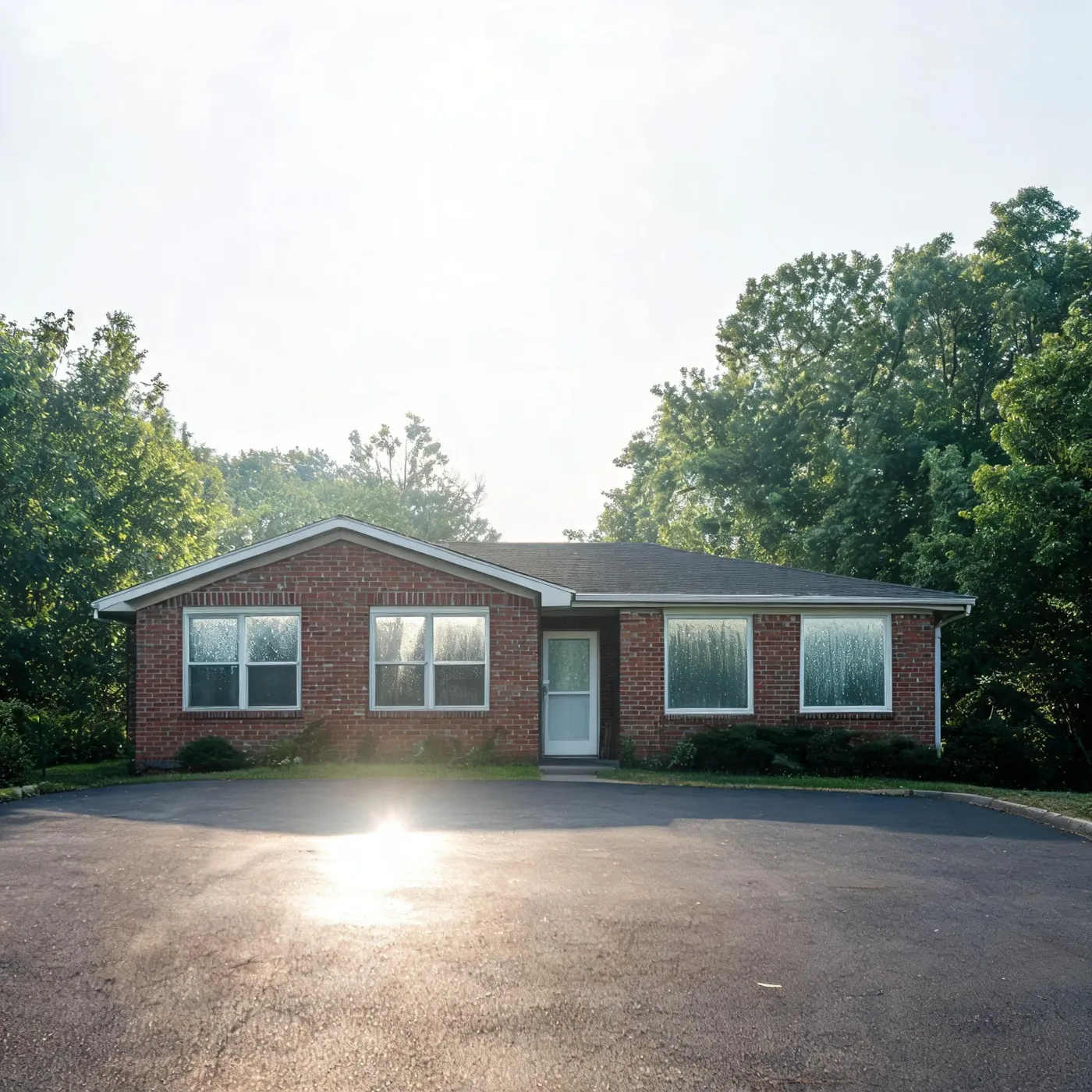
A single-story red brick ranch house with white-framed windows and a white storm door, fronted by a large asphalt parking area and backed by leafy green trees under a bright hazy sky.

NOAA puts the average summer dew point across Louisiana at 73°F, which is the sticky, heavy-air kind of humid, not just hot. That same mugginess is what your mini split is built to wring out of the air in July, and it matters again in winter because the unit doing that work is the only thing standing between your house and the cold once the temperature drops. A system that's been pulling that much moisture out of the air all summer needs to be clean and running right before it's asked to switch over and heat the place in January.

NASA POWER T2MDEW county cells weighted by homes

A closed laptop and a cream mug of coffee on a coaster sit on a dark wooden table, with a potted plant at left and a kitchen counter, tiled backsplash and shelf of ceramics in the background.

So, can it be your only heat

A mini split sized for your home and installed with the outdoor unit in a decent spot will carry a Louisiana winter on its own. The nights here that get cold don't get cold for long, and that's the difference between this state and places where a backup furnace earns its keep. The sizing and the installation are what decide whether that's true for your house, not the brand on the unit.

Getting there usually means a few calls, explaining the house and the rooms you're worried about more than once, then sitting with quotes from companies you don't know anything about and guessing which one actually does this work well. A local contractor who installs and services mini splits all winter has already seen which rooms give people trouble and why, so you're not the one piecing that together. One contractor means one conversation, not four callbacks to compare.

A gray upholstered sofa with a textured cushion sits beside a dark round side table holding a vase of green foliage, with a table lamp and sheer-curtained window behind.
A white wall-mounted mini-split air conditioner on a dark gray interior wall above a gray sofa, with a window and curtain at left, a potted olive-like plant at right, and a black vase and bowl on a table in the foreground.

Describe it once

Your request goes to one pro, not a list of companies.

Step 1 of 3: Equipment