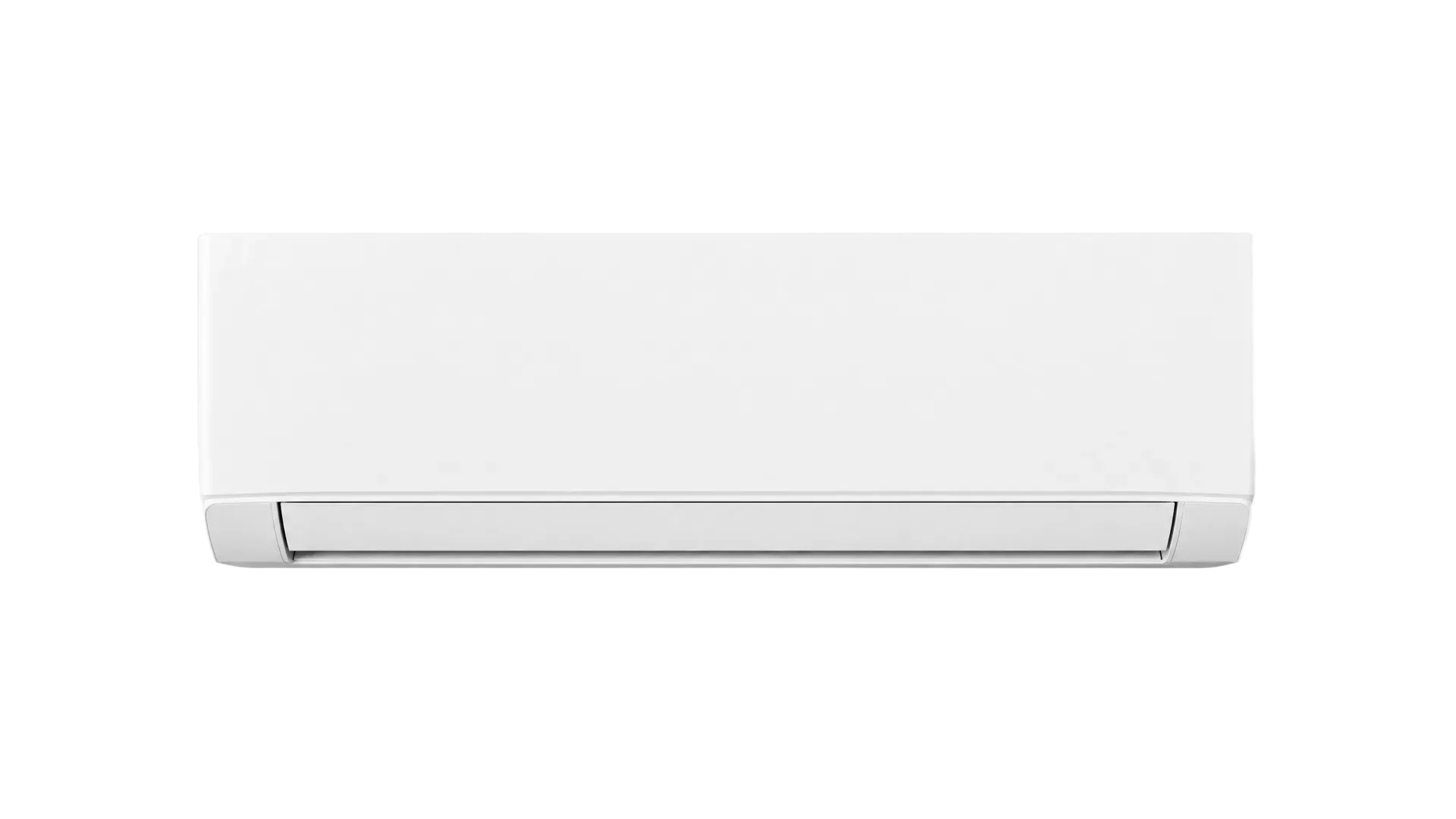
Sized right
The unit cycles on, cools the room, and shuts off. No cold corners, no warm corners. It keeps pace with a Louisiana afternoon without running flat out all day to do it.
Sizing a mini split comes down to BTUs per square foot, and in Louisiana that number runs higher than it does up north. The heat is only part of it. Humidity here sits heavy for months, and a mini split has to pull that moisture out of the air as it cools, so a unit sized off a generic chart often ends up too small for the job. Most homes end up needing somewhere around 20 to 30 BTUs per square foot depending on ceiling height, how many windows let in sun, and whether the room sits under the roof or next to shaded walls. Go too small and it runs constantly without ever catching up on a July afternoon. Go too large and it cools the air fast but shuts off before it has pulled the humidity down, leaving the room cold and damp at once. A contractor who sizes it for your layout, not just your square footage, is what gets this right.



The unit cycles on, cools the room, and shuts off. No cold corners, no warm corners. It keeps pace with a Louisiana afternoon without running flat out all day to do it.

A unit that's too small never stops running, chasing a temperature it can't hold while humidity creeps back in between cycles. One that's too big cools the air fast and quits before it pulls the moisture out, leaving the room cold and damp.
You can usually tell by late afternoon. The room never quite gets to the temperature on the thermostat, or it gets there and the air still feels damp, sticky on your skin even with the unit running. Some rooms are fine while one stays warm no matter how long it runs. The unit itself is loud or running nonstop, no real break in the cycle. Left alone, a mini split working that hard season after season wears down faster than it should, and the moisture it isn't pulling out of the air has somewhere to go: your walls, your furniture, the wood in your house.

A mini split too big for the room cools the air fast and shuts off before it finishes pulling the moisture out. You get a cold room that still feels damp. It cycles on and off all day instead of running steady, and that short cycling wears on the compressor over time. Bigger isn't safer. The unit has to run long enough to do both jobs, dropping the temperature and wringing out the humidity.

A correctly sized unit runs longer stretches at lower output instead of short blasts at full power. That steadier run time is what actually removes humidity from a Louisiana room, since moisture comes out through the coil over the course of a cooling cycle, not in the first few minutes. Installers size the indoor head to the room's square footage and its sun exposure, not just a rule of thumb off a chart, since a west-facing room with big windows pulls more load than one that stays shaded all afternoon.

This is what right-sized looks like. Air moves out of the unit steady, the room holds its temperature, and the wall and vents stay clean because the unit isn't straining to keep up. Nothing about it demands attention.

Dust like this on the vents means airflow is already restricted before the heat of the day even hits. In a Louisiana summer, a unit working through grime like that will struggle to pull humidity out of the room, no matter how well it was sized to begin with.




Getting the BTU count right for your home isn't something to work out from a chart. Room dimensions matter, but so does which way the windows face, how much shade the house gets, and whether the ceiling runs higher than standard. Two houses on the same street can need different sized units. A contractor who handles mini split installs in Louisiana sees that difference every day, between a house that holds up fine on a 12,000 BTU unit and one next door that needs 18,000 to keep the humidity from creeping back in by evening. Getting a load calculation done before you buy anything is the part that actually prevents the oversized-unit problem described above. You don't have to figure out the square footage math or guess at how your layout changes the number. Send over what you know about the space, and a contractor who works through this in Louisiana homes regularly can tell you what size actually fits.
A ducted mini split or multi-zone setup handles the whole house off one outdoor compressor, with indoor units feeding each room or zone. It works well in a home with an open layout or where running new ductwork makes sense anyway. One system means one thing to size right, and if the load calculation is off, the whole house feels it, not just one room. It also means every zone leans on the same compressor, so a unit down for repair can mean more than one room without cooling.
A standalone unit in the room that needs it, a bedroom over the garage, a sunroom, a space the main system never quite reaches, solves that problem without touching what already works. Each unit has its own compressor, so one going down doesn't take anything else with it. Sizing is simpler too, since you're matching BTUs to one room instead of balancing a whole house. The tradeoff is more equipment scattered around the property instead of one system doing it all.
At 12.52 cents a kilowatt-hour, running an oversized mini split on and off all day costs you more than it should, and an undersized one running nonstop costs more still. Getting the size right is what keeps that rate from turning into a bigger bill than it needs to be.
EIA-861 2025 statewide residential average
A new build with good windows and modern insulation holds its temperature with less capacity than an older house does. Two houses with the same square footage can need different size units if one loses cool air through the attic or around the windows faster than the other. If your house came with the system already installed, that's worth asking about when a contractor looks at the room, since whoever sized it may have gone by square footage alone and skipped everything else that matters.
A room with west-facing windows and a slab foundation takes on heat all afternoon, and a mini split sized for the square footage alone will fall behind by four o'clock. An interior room with no outside wall and shade from the house next to it can get by with less than the chart says. Same number of square feet, different load on the unit. This is why two rooms of identical size in the same house sometimes need two different BTU counts, and why going by floor space alone misses what the sun and the walls are doing to the room.


A summer dew point of 73°F is what makes Louisiana air feel heavier than the temperature alone suggests. That's the moisture a mini split has to wring out of the air before the room feels right, not just cool it. A unit sized correctly runs long, steady cycles that pull that moisture down along with the temperature. If yours is short-cycling, the room can hit the number on the thermostat and still feel damp, because it shut off before it finished the job. Source: NOAA climate normals.
NASA POWER T2MDEW county cells weighted by homes


A contractor measures each room and checks window and ceiling specs
The load calculation sets the BTU count for every zone
The indoor units and outdoor compressor get matched to that load
The installer mounts the line set, drains it, and powers it up

A mini split sized to your square footage, your windows, and your ceiling height will hold temperature without straining, and it'll pull the humidity out of the air the way it's supposed to. That's the whole answer. No chart gets you there on its own, because the house next door with the same floor plan can need a different BTU count than yours.
A contractor who's done a load calculation on homes like yours knows what that number needs to be before the first unit goes on the wall. Once you request a match, that's what you're getting connected to: someone who'll look at your specific rooms, your windows, your layout, and size the system for your house instead of a guess. From there, it's between you and them.


Get your mini split to the right pro